
Turning an inquiry into a proposal-ready handoff
Netsujo Inc. ·
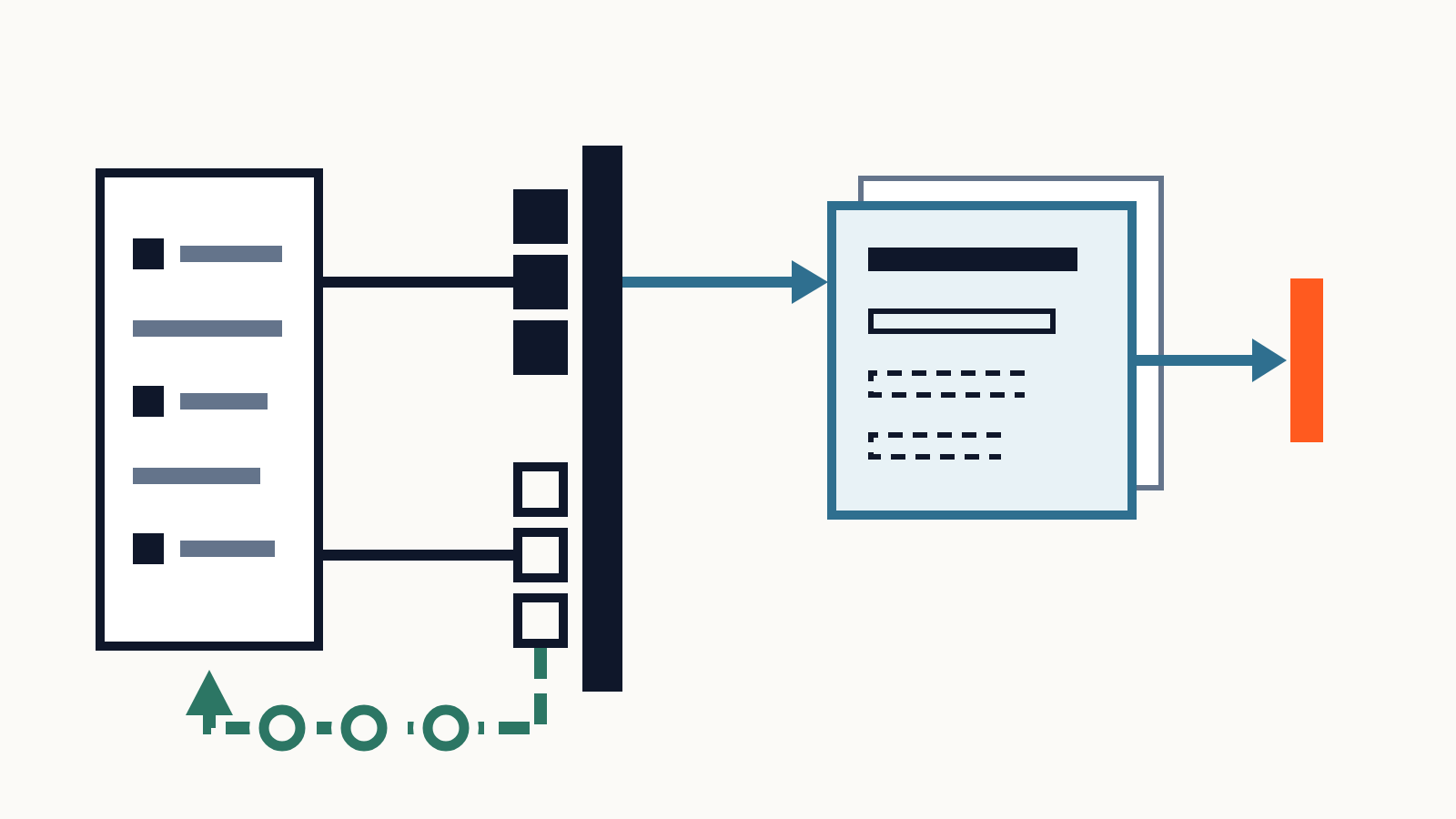
An inquiry that says “We want to make our operations more efficient” leaves the target operation and the terms of the work open. Netsujo built an offline intake demo with fictional inquiries so sales and implementation teams could share evidence from the original request and see who needs to make the next decision.
Define the information needed to prepare a proposal
We made three items mandatory: the target operation, the person responsible for accepting the result, and the scope of the data and execution environment. When the original text supplies them, the demo prepares a proposal draft for internal review. Budget and preferred timing can stay open.
The demo applies rules to structured lines marked as requirements, constraints, assumptions, and other fields. We chose this format to produce the same review materials from the same fictional input.
Trace a fictional inquiry into the review sheet
The table pairs lines from the normal fictional case with summaries of the generated review sheet and proposal draft. The input column is translated from Japanese, with the original line numbers retained.
On a small screen, scroll the table horizontally to read the summary of the demo output in the right column.
| Original fictional input, translated from Japanese | Summary of the demo output |
|---|---|
| Line 6, “Requirement: We want a list of requirements and constraints extracted from the inquiry.” | Extracted as R-01 and classified as original text, with its quotation and line number retained. |
| Line 8, “Constraint: Keep the existing customer management system unchanged.” | Extracted as C-01 and classified as original text. The review sheet retains this constraint. |
| Line 9, “Assumption: Inquiries are short texts in Japanese.” | Extracted as A-01 and classified as an assumption. It appears under the draft proposal's assumptions section. |
| Line 10, “Unconfirmed: Budget and preferred timing.” | Retained as two open items that do not block approval review. Price and effort remain unestimated. |
The original Japanese constraint is “制約:既存の顧客管理システムは変更しない。” Keeping the source and classification allows an implementation team to trace the evidence and identify assumptions requiring further confirmation. The outputs include the review sheet, requirements and constraints with source references, a draft proposal, and a work specification defining roles and acceptance criteria.
Pause for the business lead's approval
Even in the normal case, the demo pauses before human approval. The business lead reviews the original text, draft, and open items before deciding which work to accept. The demo has no step for sending material to real customers or changing production.
Return three questions when a fictional inquiry lacks detail
Another fictional input says “We want to make our operations more efficient” and “Requirement: Do something about it.” These sentences are translated from the Japanese fixture. If required information is missing, that information must first be confirmed. Approval alone cannot release a case waiting for clarification, and leaving budget and timing open also leaves price and delivery commitments undecided.
The demo prepares internal questions about the missing required information. The following questions are also translations.
- For the target operation, “What is the target operation? Please give one sentence grounded in the original text.”
- For the acceptance owner, “Who, by role, decides whether to accept the deliverable?”
- For data and the environment, “What data and execution environment are in scope? Is any information permitted to leave that scope?”
The review sheet lists three missing required items and two open items for budget and timing. The case waits for clarification, and the demo produces neither a proposal draft nor a work specification at that stage. The intake team can use these questions to organize what it needs to confirm next.
What we verified and what real operations still require
After integration, the states matched expectations for ten fictional cases. The version that added the open-item breakdown to the review sheet subsequently passed 38 checks. We also ran the normal case and the missing-information case discussed here against that integrated version.
The demo uses neither a network nor an LLM. Automated extraction from free text, operation with real customer data, and comparisons with manual work on time and quality remain untested. Applying the approach to a real intake workflow requires decisions about the input format, information handling, mandatory fields, and approval responsibilities.
Discuss the handoff from inquiry intake to implementation
If inquiries pass between your sales, onboarding, and engineering teams, bring one example of the input you receive, with customer names and personal data removed, and one decision that holds up proposal preparation. We can help design what to ask, when to send an inquiry back for clarification, and what to pass to the next person.
Discuss inquiry intake, proposal preparation and the handoff to implementation