
What should staff check before distributing an AI-drafted monthly report?
Netsujo Inc. ·
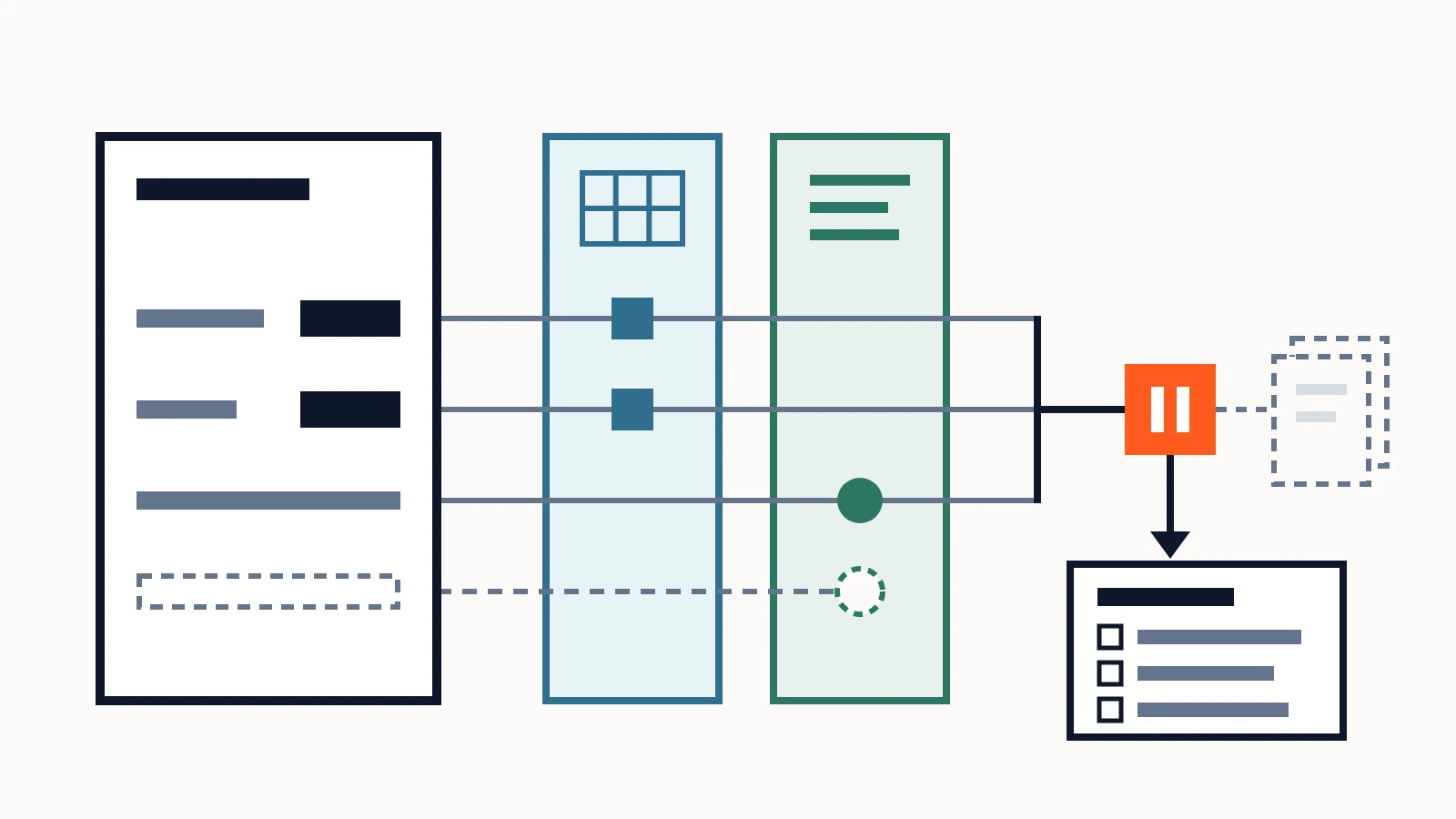
When AI helps draft a monthly report, the people distributing it still need to verify the figures and explanations and decide what can be shared. Netsujo created an exercise and a scoring rubric around a fictional company’s monthly reporting workflow. The exercise lets staff practice that decision and leaves a record of the checks they completed. The rule before distribution has four parts. Recompute the figures from the source data. Check each explanation against the source notes, and adopt only what the notes support. Hold distribution while the figures do not reconcile. Hand the report to a reviewer together with the items to check.
Set a fictional draft beside the sales notes
The draft used in the exercise is a fixed illustrative copy written by the training author for a fictional company. It is not output saved from any real AI service. Every participant receives the same draft, so their decisions can be compared.
| Material (fictional) | Relevant line (translated from Japanese) |
|---|---|
| Fixed draft (training author’s illustrative copy) | “The main reason for the increase is the effect of the autumn promotional campaign.” |
| October sales department notes | “Promotions: no promotional measures were carried out in October” |
In the original draft, part of that sentence is in bold. We removed the emphasis markup for this quotation. The lines with amounts and month-over-month figures are not shown, because recomputing them is the exercise.
A reason the notes support can be adopted. For example, the notes record an additional order from a large customer at the north branch. An explanation the notes do not support, here the promotion, is not adopted. The staff member preparing the report points to the relevant line in the notes and records why the explanation is withheld. The aim is not to doubt everything. It is to separate statements the evidence supports from statements it does not.
Recompute the figures and stop distribution if they do not reconcile
The staff member recomputes sales and the month-over-month change from the underlying sales data. They confirm the reporting period and the scope of aggregation, and correct any discrepancy. While the figures do not reconcile, the report is not distributed. When distribution stops, the staff member records the hold and passes the checked data and the unresolved questions to the downstream reviewer.
The figures and the explanation are checked against different materials. Correct figures do not justify an explanation, and a plausible explanation does not confirm the figures.
Score “wrote a doubt” differently from “checked and did not adopt it”
The rubric separates two levels for the same criterion. The table below reproduces the rubric’s descriptions.
| Criterion | 1 point | 2 points |
|---|---|---|
| Unsupported claim | Wrote a doubt | Recomputed and wrote why it is not adopted |
| Human approval point | Named only an approver | Named an approver and the items to check |
A doubt alone does not tell the next person what to verify. In the same way, a name in the reviewer field does not tell that person what to check before taking responsibility. So we connected the items for checking figures and explanations, and the conditions for stopping distribution, to a handoff checklist. The reviewer field is used together with those items.
What we built and checked, and what remains unmeasured
This exercise is part of a six-session course, each session 120 minutes, built around fictional data and a fixed draft. We built the training materials and the rubric. The training package passed automated package checks and an independent code quality review. The materials merged into main were byte-identical to the reviewed version. These checks concern the package’s structure and consistency; they do not establish learning outcomes.
A full six-session rehearsal with people and scoring by multiple evaluators have not been conducted. Agreement between evaluators, learning outcomes, sustained use, and time savings remain unmeasured. This article describes training design. It does not report what participants did or achieved.
Discuss review criteria for your workflow
If AI output is entering your team’s workflow, we can work from the drafts your team handles, the evidence it can access, and the people responsible for approving distribution.
Discuss review criteria for AI output in your workflow